13 – Follow Me GPS! A Fun & Safe Distraction – 4 Oct 2012

By far the easiest way to travel somewhere new is when you have someone driving in front of you that you can just follow. We have GPS units, showing our car as it travels down the road, and we now have the accuracy to tell what lane we are in. We also have the ability to project images onto regions of our dashboard. Why not project the image of a car in front of us that we simply follow. Need to change a lane, and the car in front of you will signal and shift over. Need to turn and the car will actually turn slightly broadside and disappear out of view in the direction you need to turn.

For those who might think this gimmicky or silly, please reconsider. The key with a GPS is that you are guided minimally. That is to say you certainly can look down at any time and view the map if you must, or see how much time you have left in your trip if you must, but the main, essential function is that you are guided down the right path toward your destination. As such, the advantage to this visual presentation to the driver is that he or she is able to focus ahead, just like following another car, and all of the cues involved in switching lanes and turning are presented in a fun and “safely distracting” way. The image could be presented below the region of your view where the hood / front of your car ends.

I personally do a lot of driving. More than anyone I have ever met, except for professional truck drivers. My situation involves a lot of highway travel. I mute my GPS and the only issue I have is reminding myself to start paying attention to it when I get near this city or that city. Having a car in the low portion of my windshield directly above my steering wheel, suddenly put on it’s blinker and move over to the far left of my windshield, will catch my attention and will not distract me from the road. I call that a safe distraction. I would think that would be as cool as having one of my friends leading me to where I need to go.

Chess player thought. Using the motion sensing features now available in select cars, and combining that with this idea, you add a large brake light to the car image and add yet another valuable feature. Deer strike area, in the hours of dusk or dawn, and why not add hazards to the car image, and have the image of a deer stick his head up on the far right hand side of the screen when the hazards are started so you the driver know why the caution is in effect. Traction low, due to storm or road repair, just slide the image of the car back and forth a little, just to remind you of the condition, just like what you would see if your buddy was in front of you and he or she was slipping about.

12 – English as Math – 3 Oct 2012

OK, yesterday’s post has me thinking long and hard down a new road that I had not yet considered.  A great benefit to this project.  Yes, one of the main reasons for me engaging in this project is taking my brain to the gym.  So today’s thought is a further consideration of artificial intelligence, and a couple very cool outcomes that will be possible.

English as math, specifically the assignment of a mathematical value to each word in the English language.  This will be done in the process of loading the language into the computer for not just translation functions (yes after English, we will then load in all the languages of the world), but for much deeper functions, such as paraphrasing, and content creation.  It’s math in terms of absolutes, (like the word “always”) having a higher value than words with less strength (like the word “occasionally” or “usually” ).   Another measure will be a value of literary simplicity or difficulty.  Remember, I am suggesting that the computer will be loading all words, phrases, meanings and uses into a database, and making them available to aid a person in creation of content.  The “writer” may want to gear their paper for 6th grade English class, and another “writer” may be  intending to create a PhD level essay.  The computer could rate all words on their ability to be understood by young readers, or perhaps their ability to impress high level intellectuals.

Now add another step to the equation.  Take the same level of intelligent analysis of the language and have the software go out and catalog every sentence of every scholarly sentence in existence, and then every news article, and even every opinion piece and blog post.  These items could all be rated as well.  Studies could be rated high on one scale while opinion could be rated high on another.  Now, take the intuitive auto complete of a standard Google search and connect it to this in depth database of all information, and you have a new world.

Many things should just out at you right away, ways that you could use such a database, but here’s a few that come to mind tonight.  First, Siri would become much MUCH smarter.  Second, let’s say you wanted to write an essay for college.  No more wasted hours looking up information and using citations and crediting others just to back up an opinion.  Now you just make an opinion statement verbally to the computer.  The software comes back and reports, “I have 48 sources on that topic, and they are 82% agreeable to your position. You then simply state the required word count, amount of sources, and any particular points you want to make, and the software goes out and gathers the data, paraphrases all pertinent data, organizes the content and writes an entire essay, to include citations and reference list.This leaves you, the student, thinking and learning, instead of reading, and searching.  Lawyers could in seconds find precedent on topics not by searching keywords, but for searching for topics and particulars and the software could find actual relevant information without being hung up by keywords that may not match exactly.  Individuals could look up medical issues and immediately find ALL related study data, and it would be simplified ACCURATELY down to whatever level of understanding is needed.  Politicians could be fact checked as the words came out of their mouth, by a computer.

Now, this is where the conversion would be very critical.  Conversions would have to be exacting.  Opinion would be wildly dangerous to the overall math if represented as fact, and vice versa, and yes, now take a computer that can accurately create content based on basic concepts and combine that with proper translation software and similarly setup databases of language in other tongues, don’t forget a brilliant text to speech technology, and you can pick up the phone anytime and have a game of worldwide phone roulette.  How much fun would that be?

10-11 Real Computer Generated Voice / Voice Stealing? 1-2 Oct 2012

OK, so at this point everyone should be familiar with the computer voice.  The siri voice for example, is functional, but still has no life.  What is the problem, and how do they fix it?  Well to put it as simple as possible, the technology, at least on an individual device is still based on word by word pronunciation.  Call siri attractive and she will say “there, there.”  It sounds like 2 completely separate words, instead of a full phrase.  Similar with the droid version.  It knows to lower the pitch of the second word because it is at the end of the segment, but it is just not treating the phrase / combination of words like we would.  We naturally assign pitch and timing to various words in a group, so that we wind up emphasizing particular words to have a particular effect.  For instance, everyone will read that last sentence and naturally put a slight delay after the comma, but also after the word “timing” and also after the second instance of the word “words.”  There are also, more subtle delays taking place in other portions of the sentence.  I will write it out in a way to illustrate this timing break.

We naturally assign pitch and timing

to various words

in a group,

so that we wind up emphasizing

particular words

to have a particular effect.

I think to put it as simple as possible the program needs to be reading ahead, and making grammatical determinations.  This shouldn’t be too big an issue, since Word has been doing this for us for a while. What I’m describing would be a “next step” in the analysis of the text on the part of the computer.  The grammar drives the pitch and timing of the phrase, and it doesn’t need to be a comma or period to have a noticeable amount of delay.  I have read others claiming that there would have to be more data involved during the writing process in order to put emphasis where it should be, and I say nonsense.  We are able to figure out where it goes.  The AI should too.

There is a second issue with current text to voice technology. Currently, when I set up a customer with their own messaging software that includes a text to voice solution, they are required to read a lengthy script of words, for the computer to sample and piece together a basic vocabulary of sounds.

To put this simply, the computer is taking particular words and sounds and piecing other words from those samples.  The technology exists already for voice to text.  Yet it is not being utilized in this, it’s most needed application.  The software should be simply sampling from any length of speech and determining the words it is hearing, then (as mentioned above) analyzing the grammar cues from the sentence structure, then comparing the actual pitches and delays with the grammar determinations made, and assigning a character to the voice it is hearing.  Combining this with the actual tone of the voice, and the way in which certain letter and letter combinations sound, a realistic synthesis occurs.  The data pulled from the sample, is put against a saved template.

I will use the analogy of a Barbie type doll.  Currently sounds are chopped and combined like parts of a doll glued together.  I’m talking about a new doll being formed complete, after simply observing another doll. Any samples used, like hair color, height, facial features, etc, are simply compared to what the software has already saved as a standard template for what a doll should look like, and the samples are not having to be gathered by taking snapshots of the doll in certain, particular poses, in particular angles.  The software would just need a few shots, and then would be making the calculations and going immediately into synthesis mode.  Obviously, the more footage you got, the more accurate the facsimile to the original.

The real fun, and inevitable conclusion of this system being utilized, is simply recording a particular voice, (perhaps Morgan Freeman from the movie War of the Worlds), with your smart phone.  Then letting your app synthesize that voice, and it sounding perfect.  Everyone would be available.  Easily have whatever voice you want for your GPS or voicemail message by just listening to that person for a short while.  Taking any book pdf file you have and having Morgan Freeman read it to you, without having to pay Morgan Freeman to sit in a room and actually read through the whole thing.

Issues- Obviously if a paragraph was full of improper writing and poor sentence structure, the grammar determinations may be ugly, but that would be that way in text form already, so that isn’t the fault of the software, that’s the fault of the writer.

IDEA – whew, this is a first for me so allow me to revel in a small delight.  A wonderful idea comes to me whilst writing about another.  This is immense.  Since the software will be making grammar determinations and reading the sentences back to you, the following scenario would be possible, and is absolutely revolutionary.

The user, in this case a high school student, is preparing an essay.  He simply reads into the PC or phone and the device takes dictation and prepares the essay.  When he is finished he asks the device for a quick review.  Making comparisons to it’s existing standardized database of proper english stylings, as mentioned above, the device comes across a particular sentence and says,

” the prepositional phrase, “under the bridge” in sentence 15, would flow better if placed before the word “because.”   May I demonstrate? ”

The device could then read the sentence back with the improvement, or could be set up to automatically correct for improved flow.  Why not, while your at it, look up the professor online and after determining his or her home town, modify my story to contain certain references to landmarks in the town of their youth.

8-9 Automated Tile Mosaic Manufacturing / Interface – 29-30 Sept 2012

Wow, some honest assessment….
Today, I asked myself, “am I really going to be able to generate over 350 ideas in a year that are worth reading?”  I don’t think the issue is having the ability to continue, rather I think the issue is going to be those days rich with family time, where my mind is just operating differently.  My 16 year old son is aware of my project and I have shared some posts with him.  While he seems to be enthusiastic about it, (ha, as enthusiastic as a teenage lad could be about something that didn’t giggle and wear makeup), I can not allow my balance to be lost as I pursue this project.  I will do my best, and try to keep pride and delight in that knowledge.  Alright, back to it.

I was fooling about on Photoshop and came across an effect that could, in a mere click, take any picture and turn it into a tile mosaic.  Having years of tile experience, and a few dandy mosaics to my name, I immediately thought of an option for the lot of us, who don’t have a team of mosaic artists like the Vatican, and would like some custom art.  A website that would allow folks to submit pictures, decide sizes and detail levels, and order custom, “photo real”, tile mosaics that would actually be custom, made to order and the entire process would be automated.

Ok, to start with the website.  It would allow customers to upload and edit images.  Crop, color, and other Instagram type effects would all be available.  They could then pick a size and detail amount, with an automatically adjusting price.  They could see a virtual image of what the finished mosaic would look like and then submit payment and set the wheels into motion.

At the heart of the manufacturing would be various tile varieties, in various colors, and various sizes.  A computer guided robotic arm with a very small suction tip would be oriented over a 13″ by 13″ grid.  The available tiles would be oriented in an array that would allow for easy loading into bins and the tiles would be run down individual chutes to the array so that they could be easily grabbed with the suction tip, hovered over a precise portion of the grid, and dropped in an exact location.  The mechanical engineer who assisted me with the design assures me the equipment he has worked with would be able to grab and place 100 pieces in such a speed that it would look like time lapse video.

The grid would then be “tightened up” using an adjustment of the four sides and a certain amount of vibration, causing the tiles to come close together.  The system would be set up to produce whatever total size the customer wanted, in 12″x12″ sheets, typical of what you purchase at the tile yard. Next would come a gluing and the placement of a backing sheet, which allows the tile setter to easily set the mosaic in place and keep everything aligned.  The glue and backing sheet would be placed directly on top of the tiles as they are setting in the grid, so yes, the computer would have already had the design placed upside down and backwards.  The finished sheet would then be set on a drying rack.  Done.

Without the use of a computer, a custom mosaic shop can not touch a photo with any sense of realism or expectation that you will recognize a persons face, but with the computer, an adequate amount of colors and the right amount of detail this would now be possible, and with a human only required to handle oversight.  The money that folks would pay to have a proper landscape scene or portrait accurately represented in marble or glass tile, is ridiculously high. Truly, priceless.  It just can’t be done previous to a device such as I am describing.  The beautiful part is that with such a device, it would be affordable to those who don’t necessarily own their own jet.

I hope to see this happen.  Please note, I am not for a second talking about printed mosaics.  This is not a legit mosaic.  They are in every other Subway sandwich shop.  I am talking about real mosaics, using real materials.  Just for example (and because I’m not going to hijack anyone’s personal photos) just google “Vatican mosaic studio” and look at some human made stuff that truly is beyond price, taking hundreds of hours to make.

5 – Virtual Keyboard meets Virtual 3d Screen – Sept 26 2012

Image

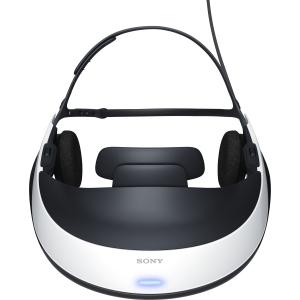
These glasses are the Sony HMZT1 and provide not just sound, but a virtual 72″ 3d screen.

Image

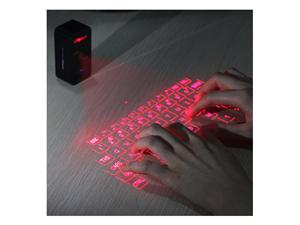
This is the virtual keyboard, using lasers to create a virtual keyboard, and trace the movements of the hand, taking in keystroke data.  I actually did have a brief email exchange, some years back with one of the Siemens’ engineers in Germany, who was working on the initial concept development.  (that was concerning just some of the finer points on the virtual keyboard, specifically the initial calibration and setup)

The really cool stuff occurs when you look at the two of these combined, with the addition of position tracking.  The concept occurred to me a few years ago.  With the virtual keyboard you are limited to “press” the virtual keys within the confines of the laser representation of the keyboard.  Linking up the two devices would allow you to have a completely adjustable keyboard surface, colored anyway you want.  Now I will describe what I’m talking about.

The user places the keyboard on the desk surface.  With added positional tracking of the device, the computer is able to track the actual location of the keyboard surface.  Now the user puts on the glasses, and with the positional tracking of the glasses, the computer is then also able to track the actual location of the users viewpoint.

Now imagine a simple black background screen.  Using the positional tracking, you swivel your head 360 degrees, and everywhere you look is black.  Turn on the virtual keyboard, and now when you look down in the vicinity of the keyboard, a virtual representation of it appears.  You position your hands, (also represented on the screen because they are being picked up by the laser sensors built into the virtual keyboard), and the keyboard now can adjust to you.  Perhaps you just hold down your pointer fingers wherever you’d like and the computer knows this is the designated “calibration” command.  The virtual keyboard grows or shrinks and aligns itself to your fingers, and now you can just start typing.  When you look up, the computer can show you whatever you’d like.  If you need to look down again to orient yourself, you will see the virtual keyboard, existing in the field of view exactly where it is in reality.

If I get a chance I will put up some sketches of this, as I know it is a concept that some will not completely grasp either what it means visually, or what it means functionally.  I assure you, it’s mind blowing stuff.  🙂